Friday, April 20, 2012

RABBI ARTHUR SEGAL: JEWISH RENEWAL: DEREK ERETZ: HONORING ONE'S WIFE

RABBI ARTHUR SEGAL: JEWISH RENEWAL: DEREK ERETZ: HONORING ONE'S WIFE
 
 Jewish  Spiritual  Renewal:
  
  Derek  Eretz Zuta + Rabbah:
  
 Shabbat  4/28/12 
 
 (aka  Derech  Eretz, Derekh Eretz )


Shalom  my dear Chaverim, Talmidim, v' Rabbanim, friends, students and fellow rabbis: 
  
An oneg, joy-filled, Shabbat this coming weekend to all. I hope you all had a sweet and joyful Passover.


We continue with our exploration into the Talmudic Tractates of Derek Eretz Zuta and Rabbah. (aka Derech Eretz Zuta, aka Derech Eretz Rabbah.  As was mentioned, zuta is Aramaic for 'small', and rabbah is 'large').
  
Remember that Derek Eretz is not about Jewish ritual. It is  about how we are to treat one another and what traits of character, middot, we  are to try to develop. The lessons are universal and ecumenical. The  development of character traits and Jewish spiritual renewal  transformation is called  Mussar.
  
For  those new to the class Baruch ha Ba! Welcome!


From  here you will find links to preceding classes in this series. So, together we continue:
  
 TALMUD  BAVLI
  
 TRACTATE 
  
 DEREk ERETZ  ZUTA
  
 (aka  Derech  Eretz, Derekh Eretz)
  
Today we will continue with CHAPTER 9 of Talmud  Bavli Tractate Derek Eretz Zuta Verses  9:3-5. 
 

CHAPTER IX.

''9:3: Be careful about the honor of your wife. 9:4: Be glad of your chastisement, for this probably saves you from Gehenna. 9:5: Be joyful at your table when the hungry derive benefit from it, in order that you enjoy longevity and have a share in the world to come. Be also joyful when giving charity from your house, in order that you may pacify the anger of death, as it is written [Prov. xxi. 14]: "A gift in secret pacifieth anger, and a bribe in the bosom, strong fury." If you have troubled your feet for the poor or for the sake of a merit, the following passages may be applied to you [Deut. xxviii . 6]: "Blessed shalt thou be at thy coming in, and blessed shalt thou be at thy coming out."
 
 Let us begin to day with : ''9:3: Be careful about the honor of your wife.'' "Live happily with the woman you love through all the meaningless days of life that God has given you under the sun. The wife God gives you is your reward for all your earthly toil,'' so teaches King Solomon in Ecclesiastes 9:9. A happy marriage is one of the highest goals of Judaism, along with life itself.
 
In the Torah, women have the status of chattel, belong to their husbands, fathers, or brothers in the absence of a father. There are still many laws protecting women's rights in Hebraism, such as making  a husband with multiple wives not to love one more than the other, or giving a women the option of not having to marry her brother-in-law when her husband dies leaving her childless or allowing daughter's to inherit.
 
But in Judaism many laws were enacted to give woman honor ,stature  and rights. 

Judaism does not consider sex to be sinful or obscene. We do not think of sex as some impure act that we must do in order to have children. The rabbis admit that the desire to want sex comes from our yetzer ha ra, but we need to tame it to have sex 'Judaically,' if you will. The rabbis tell a story of how they petitioned God to do away with the yetzer ha ra, and when God did this, no one went to work, no one built homes and a new generation of children did not arrive. The rabbis then asked God to gave humankind back the yetzer ha ra.

Judaism wants us to control our sexuality.  When sex is enjoyed with love as well as desire with a husband and wife, sex in Judaism is a mitzvah.  Sex in Judaism is not just for procreation. It helps for a loving bond between the wife and husband, equals in a marriage. Certain types of contraception are allowed in Judaism. 

The Hebrew word for sex, literally means to know, Dat. Relationships based on sex without a co-joining of hearts and minds, is not Judaic.

But the need for physical compatibility is important in Judaism. In olden times, with arranged marriages, the couple met before the wedding. If either party found the other not to be sexually attractive, the wedding was called off. 

The Talmud lists times to have sex and times not to have sex. Selfish sex without regard for the partner's pleasure is disallowed. Sex should be a joyous time for both. Long before the recent marital rape laws, Judaism forbids a man to force his wife to have sex.

One can't use sex abusively by either forcing it, or denying it, as a form of punishment. One can't have sex if inebriated or when fighting.  

Judaism, different than Hebraism made sex the wife's right and not the man's right. Depending on one's occupation, a husband has a duty to give his wife pleasurable sex regularly. Unlike the clueless husbands of today's sit-coms, a husband must watch for signs that his wife wants sex, and to offer it to her before she has to ask for it.  The Talmud calls wife's right to sex, onah, and is one of a wife's three basic rights along with clothes and food. 

A man cannot reduced his wife's onah. The Talmud goes into detail about the quality and frequency of sex that the husband must give to his wife. This is spelled out in the ketubah, marriage contract.

A husband may not go on a voyage for along time, as this would deprive his wife of sexual intercourse. If a husband, even after having children, refuses to have sex, a woman can divorce him in Judaism. This is quite a change than Hebraism's use of the get, bill of divorcement, in which only a man can institute it.

On the flip side to keep things equal, Judaism does not allow a woman to keep sex from her husband, even though we have mentioned it is her right and not his. If a wife withhold's sex from her husband, he may divorce her.  The wife looses her settlement enumerated in her ketubah.

Sex is not just vaginal-penile penetration in Judaism. The Talmud states, "a man may do whatever he pleases with his wife," if both are agreeable. The Talmud encourages foreplay to arouse the woman. It specifically  forbids a man from using a ''morning erection'' without first having his wife's permission and arousing her.

There are numerous other ways in which a man can honor his wife beyond the bedroom. Here is one of many more:

We find that God...adorns the bride, as it is written, "And the Lord God built...". Rabbi Yochanan said, "He built Eve [interpreting the word binyan as b'naeh , with beauty] and adorned her with jewels and showed her to Adam."  Said Rabbi Abahu, "Perhaps you will say that He showed her to him from some carob tree or bush? But no, after He adorned her with 24 kinds of jewelry, only then did He show her to him. For it says, 'And He brought her to the Adam.'" (Midrash Rabbah Ecclesiastes 7:7. )
 
Rita Rudner quipped: ''I think men who have a pierced ear are better prepared for marriage.  They've experienced pain and bought jewelry.''  
 
The Code of Jewish Law, Orach Chaim 529, reads:  "Men are instructed to buy our wives new clothes and jewelry before every Jewish holiday, each husband according to his financial means.'' Men are happy when we ''drink wine and eat meat.'' Women, however, would rather ''wear diamonds.''
 
The Talmud tells us that a man's livelihood depends on his getting his wife jewels. Talmud Bavli Tractate Bava Metzia 59a teaches us:  Rebbi said in the name of Rabbi Chelbo : "A person should always be careful about the honor of his wife, for blessing is found in a person's home only due to his wife, as the verse states, 'And he did good to Abram for her sake.'"
 
So it is obvious that we honor our wives by treating them with dignity, love, respect, no lashon ha ra about her, and to be sensitive. But jewels? Really? Yes, for when God provided for all of us in B'Midbar, by giving us manna to eat each day, Talmud Bavli Tractate Yoma 75a, says God provided women with jewelry! Trying to emulate God is hard enough trying to be just, kind, merciful, and forgiving, but buying gems...and at maybe even at retail?!

On the same daf, Rava, speaking to his town's people says, "Honor your wives, in order that you will become rich."  Ravi explains in Talmud Bavli Tractate Shabbat 62a. ''There are three things that bring a man to poverty…and one is when his wife curses him." Rava explained, "When she curses him about jewelry, because he can afford it and does not provide her." 

 
The Kabbalah gets into this as well: '' When a man buys his wife fine clothes and jewelry, he should have in mind that he is beautifying the Divine Presence, represented in this world by none other than his wife." "Every man must see himself as standing between two women—the Shechinah (Divine Presence) above, providing him with all his needs, and the Shechinah below, i.e. his wife, to whom he provides in turn.''
 
 Men are simply a channel. According to how we provide for our wives, so will God provide for us.  Talmud Bavli Tractate Chullin 84b reads: '' a man should eat and drink less than his means, clothe himself according to his means, and honor his wife and children beyond his means. For they depend upon him, and he depends on the One that spoke and the world came into being.''
 
In a Jewish Spiritual Renewal sense, a marriage is not a business deal, as it was in Hebraism. If one's marriage is based on:  "you give this and I give that," this is no spiritual union.  "Love turns one person into two and two into one." (Rabbi Don Yitzchak Abarbanel). Our souls need to fuse as one. 

To show love, one buys something that has no purpose at all. And the sages tell us its jewelry. This goes back to emulating God. As God provides for all of our earthly needs, we need God for our spiritual needs. We need a relationship with God that goes beyond the physical into the metaphysical. The prophets and Midrash describe the Jews' relationship with God as a marriage, with God as the groom, the Israelites as the bride, and the Torah as the Ketubah.
 
Let us continue with: ''Be glad of your chastisement, for this probably saves you from Gehenna.'' We discussed how we are told to love one who reproves us in Chapter 3 of Derek Eretz Zuta. Reproving means gentle instruction, done privately.Chastisement is  a bit stronger.
 
We actually have a mitzvah in the Torah to reprove our fellows when they are doing something wrong.[Lev.19:17]. It is one of the ways the Torah teaches us to love our fellow. The Talmud goes into detail about when one should reprove. We have to make sure one's ears and hearts are open to learning.
 
So assuming that one is chastising us for the right reasons, we are to listen, evaluate and learn. We are not to ignore, or worse tell someone to mind their own business. In Judaism, a way of life, others' behaving badly does effect us and the community. Rabbi Shimon bar Yochai , the traditional author of the Kabballah's Zohar, tells of the fellow in a small boat who is drilling a hole beneath his seat. The other passengers yell at him to stop as he will sink the whole boat. He responds that he is only drilling under 'his' seat. [Midrash Rabbah Vayikra 4:6]."Kol Yisroel areivim zeh lazeh ." All Israel, all humans, are responsible for one another. [Talmud Bavli Tractate Shevuot 39a ].
 
So when someone takes the time to chastise us, gently, with love, and with our best interests at heart, listen and do not hate the person for doing so.
 
Let us end this lesson with :''9:5: Be joyful at your table when the hungry derive benefit from it, in order that you enjoy longevity and have a share in the world to come. Be also joyful when giving charity from your house, in order that you may pacify the anger of death, as it is written [Prov. xxi. 14]: "A gift in secret pacifieth anger, and a bribe in the bosom, strong fury." If you have troubled your feet for the poor or for the sake of a merit, the following passages may be applied to you [Deut. xxviii . 6]: "Blessed shalt thou be at thy coming in, and blessed shalt thou be at thy coming out."

The Rabbis discuss what we are obligated to provide a  individual who is poor. The rabbis cite the verse that instructs us to provide the pauper, "…sufficient for his needs which he is lacking."  (Deut .15:8). Talmud Bavli Tractate  Ketubot 67b talks about how we give charity.

"You are obligated to provide the poor person "sufficient for his needs," but you are not obligated to make him rich. When the verse in the Torah adds, "which he is lacking," this implies even a horse to ride upon and a servant to run before him."
While the Gemorah explains that  a person is used to luxuries , and has come into hard times, and we provide him with  a servant , we are not making him rich.  Going above having our  needs fulfilled is being rich and having no concerns.  
 
So giving to those in need, even if we get tired and sore feet from running to do these mitzvot of chesed brings us joy longevity, heaven, a painless death, and Divine blessings whether in or out of our homes.    

We discuss these middot, character traits chesed, respect, love, tzadakkah,  throughout the majority of chapters in  ''The  Handbook to Jewish Spiritual Renewal: A Path of Transformation for the Modern  Jew'' ' (http://www.jewishspiritualrenewal.net/ )  as well as in most chapters of ''A  Spiritual and Ethical Compendium to the Torah and Talmud''  

  
What are your ideas about these character traits?  How has learning Talmud's Derek Eretz helped you in your  interpersonal  relationships? How  has understanding the spiritual and ethical teachings of  Judaism helped you live a more joyous life? 
  
Next class, Baruch ha Shem, we will continue with Derek Eretz Zuta, Chapter Seven. Thank you for joining me.
 
For those who want a d'var Torah on Parashot Tazria and Metzorah  from '''A  Spiritual and Ethical Compendium to the Torah and  Talmud'' please click on  
and
 
 
 https://blogger.googleusercontent.com/img/b/R29vZ2xl/AVvXsEglRRwqpnpg_jV2q4Z3m0LpeLubjD37Arf6JX6ov_UXq34iwBgUSGRUuMeHFR1DXMqHVM6H_vZH2qyxBVsp9lcr6ZAinkwZu2hKu8-oQMuFrcjWJrIxzSz4D1OT3s8znMlUXlerspY68zU/s1600/coverimage-771342.jpg
 

Shabbat Shalom:

Rabbi Arthur Segal_

 www.jewishspiritualrenewal.org_ (http://www.jewishspiritualrenewal.org/ ) 

Jewish Renewal_ 

www.jewishrenewal.info(http://www.jewishrenewal.info/ ) 

Jewish Spiritual Renewal

Jewish Spirituality

Eco Judaism

Hilton Head Island, SC,  Bluffton, SC, Savannah,  GA


If visiting SC's Low Country, contact us for a Shabbat meal, in our home by the sea, our beth yam.


Maker  of Shalom (Oseh Shalom) help make us deserving of Shalom beyond all human comprehension!!

 
Rabbi Arthur Segal www.jewishspiritualrenewal.org
Jewish Renewal www.jewishrenewal.info
Jewish Spiritual Renewal http://rabbiarthursegal.blogspot.com
Jewish Spirituality
Eco Judaism
facebook.com/RabbiArthurSegalJewishSpiritualRenewal
Hilton Head Island, SC, Bluffton, SC, Savannah, GA

Wednesday, April 18, 2012

RABBI ARTHUR SEGAL: JEWISH SPIRITUAL RENEWAL: FOOLISHNESS OF MAKING VOWS

RABBI ARTHUR SEGAL: JEWISH SPIRITUAL RENEWAL: FOOLISHNESS OF MAKING VOWS
 
FROM BLUFFTON SUN, BLUFFTON SC, APRIL 2, 2012
LYNNE HUMMELL EDITOR


Shalom and Peace:

I invite you again to learn about Judaism's advice about daily living from its Talmud.

''The commencement of making vows is the door to foolishness.'' [Derek Eretz 3:4]. Jews and in reality Christians, are taught to 'affirm' but not 'swear,' [i.e. vow], to tell the truth. The reason is that it is virtually impossible as humans to keep vows 100 percent. In the case of truth, we only can relate what we saw or heard or remember. It may be true to us, but it doesn't mean it's the actual Truth.

There is a spiritual lesson in the Talmud about ''The Truth.'' Two conflicting opinions can both be valid. And some conflicting views cannot exist without the other. ''This and also this are the words of the living God, Eilu v'eilu divrei Elohim Chayim [Talmud Tractate Eruvin 13b.]'' Eilu v'eilu emphasizes the incompleteness of any single opinion. The v', which means "and," is essential, uniting and complementing the two opinions without choosing one or compromising the integrity of either. ''Nobody's right if everybody's wrong.'' (Stephen Stills, 1966)

When we promise to do something, we always add:'' If it is God's will.'' We can vow to pick someone up tomorrow at 3 PM, and God forbid, find ourselves with a flat tire or worse.

So vowing becomes foolish as it implies we are in full control of the world about us. We are not, and never will be.

The situation of General Yiftach and his daughter is one of the most troubling stories in the TaNaK, {Bible}, from Judges 11. Yiftach makes a vow to sacrifice the first thing that comes out of his house if he is victorious in his battle against the Ammonites. He is victorious, and when he comes home, his daughter, who is his only child, runs out dancing with tumbrels to greet him. It is she whom he must sacrifice. He does not retract his vow, and the implication at the end of the story is that he sacrificed her, after she spent two months in the hills mourning her virginity with her friends.

The Talmudic rabbis called Yiftach "as great as Samuel," in his leadership. All Yiftach had to do was go to Pinchas, the high priest, and have his vow annulled through the vehicle of "hatarat nederim" (undoing of vows). The Midrash says that Pinchas was waiting for Yiftach to come to him. Yiftach, the chief political and military leader, was waiting for Pinchas to come to him. Each was trying to protect his honor. In doing so, the life of Yiftach's beloved daughter was lost.

Both Yiftach and Pinchas were punished by God for this. Yiftach died from a disease where his limbs fell off one-by-one. He was buried in "the cities of Gilead," a limb here and a limb there. Pinchas no longer could receive the Ruach ha Kodesh (the Holy Spirit).

So we are taught the good advice that it is foolish to make vows.

Rabbi Arthur Segal is an international lecturer, author, and teacher. Visit him at www.JewishSpiritualRenewal.org .   Follow him on FaceBook at 'Arthur L Segal', on Twitter at RabbiASegal, or his blog at  http://rabbiarthursegal.blogspot.com  .  Email at RabbiSegal@JewishSpiritualRenewal.net

 
Rabbi Arthur Segal www.jewishspiritualrenewal.org
Jewish Renewal www.jewishrenewal.info
Jewish Spiritual Renewal http://rabbiarthursegal.blogspot.com
Jewish Spirituality
Eco Judaism
facebook.com/RabbiArthurSegalJewishSpiritualRenewal
Hilton Head Island, SC, Bluffton, SC, Savannah, GA

RABBI ARTHUR SEGAL: JEWISH DESTINATION WEDDINGS : INTERFAITH :HILTON HEAD, SC

 RABBI ARTHUR SEGAL: JEWISH DESTINATION WEDDINGS : INTERFAITH :HILTON HEAD, SC


FROM BLUFFTON SUN, BLUFFTON SC, APRIL 2, 2012
LYNNE HUMMELL EDITOR


Shalom and Peace:

I invite you again to learn about Judaism's advice about daily living from its Talmud.

''The commencement of making vows is the door to foolishness.'' [Derek Eretz 3:4]. Jews and in reality Christians, are taught to 'affirm' but not 'swear,' [i.e. vow], to tell the truth. The reason is that it is virtually impossible as humans to keep vows 100 percent. In the case of truth, we only can relate what we saw or heard or remember. It may be true to us, but it doesn't mean it's the actual Truth.

There is a spiritual lesson in the Talmud about ''The Truth.'' Two conflicting opinions can both be valid. And some conflicting views cannot exist without the other. ''This and also this are the words of the living God, Eilu v'eilu divrei Elohim Chayim [Talmud Tractate Eruvin 13b.]'' Eilu v'eilu emphasizes the incompleteness of any single opinion. The v', which means "and," is essential, uniting and complementing the two opinions without choosing one or compromising the integrity of either. ''Nobody's right if everybody's wrong.'' (Stephen Stills, 1966)

When we promise to do something, we always add:'' If it is God's will.'' We can vow to pick someone up tomorrow at 3 PM, and God forbid, find ourselves with a flat tire or worse.

So vowing becomes foolish as it implies we are in full control of the world about us. We are not, and never will be.

The situation of General Yiftach and his daughter is one of the most troubling stories in the TaNaK, {Bible}, from Judges 11. Yiftach makes a vow to sacrifice the first thing that comes out of his house if he is victorious in his battle against the Ammonites. He is victorious, and when he comes home, his daughter, who is his only child, runs out dancing with tumbrels to greet him. It is she whom he must sacrifice. He does not retract his vow, and the implication at the end of the story is that he sacrificed her, after she spent two months in the hills mourning her virginity with her friends.

The Talmudic rabbis called Yiftach "as great as Samuel," in his leadership. All Yiftach had to do was go to Pinchas, the high priest, and have his vow annulled through the vehicle of "hatarat nederim" (undoing of vows). The Midrash says that Pinchas was waiting for Yiftach to come to him. Yiftach, the chief political and military leader, was waiting for Pinchas to come to him. Each was trying to protect his honor. In doing so, the life of Yiftach's beloved daughter was lost.

Both Yiftach and Pinchas were punished by God for this. Yiftach died from a disease where his limbs fell off one-by-one. He was buried in "the cities of Gilead," a limb here and a limb there. Pinchas no longer could receive the Ruach ha Kodesh (the Holy Spirit).

So we are taught the good advice that it is foolish to make vows.

Rabbi Arthur Segal is an international lecturer, author, and teacher. Visit him at www.JewishSpiritualRenewal.org .   Follow him on FaceBook at 'Arthur L Segal', on Twitter at RabbiASegal, or his blog at  http://rabbiarthursegal.blogspot.com  .  Email at RabbiSegal@JewishSpiritualRenewal.net

 
Rabbi Arthur Segal www.jewishspiritualrenewal.org
Jewish Renewal www.jewishrenewal.info
Jewish Spiritual Renewal http://rabbiarthursegal.blogspot.com
Jewish Spirituality
Eco Judaism
facebook.com/RabbiArthurSegalJewishSpiritualRenewal
Hilton Head Island, SC, Bluffton, SC, Savannah, GA
Rabbi Arthur Segal www.jewishspiritualrenewal.org
Jewish Renewal www.jewishrenewal.info
Jewish Spiritual Renewal http://rabbiarthursegal.blogspot.com
Jewish Spirituality
Eco Judaism
facebook.com/RabbiArthurSegalJewishSpiritualRenewal
Hilton Head Island, SC, Bluffton, SC, Savannah, GA

RABBI ARTHUR SEGAL: JEWISH DESTINATION WEDDINGS : INTERFAITH : BLUFFTON, SC

 RABBI ARTHUR SEGAL: JEWISH DESTINATION WEDDINGS : INTERFAITH : BLUFFTON, SC


FROM BLUFFTON SUN, BLUFFTON SC, APRIL 2, 2012
LYNNE HUMMELL EDITOR


Shalom and Peace:

I invite you again to learn about Judaism's advice about daily living from its Talmud.

''The commencement of making vows is the door to foolishness.'' [Derek Eretz 3:4]. Jews and in reality Christians, are taught to 'affirm' but not 'swear,' [i.e. vow], to tell the truth. The reason is that it is virtually impossible as humans to keep vows 100 percent. In the case of truth, we only can relate what we saw or heard or remember. It may be true to us, but it doesn't mean it's the actual Truth.

There is a spiritual lesson in the Talmud about ''The Truth.'' Two conflicting opinions can both be valid. And some conflicting views cannot exist without the other. ''This and also this are the words of the living God, Eilu v'eilu divrei Elohim Chayim [Talmud Tractate Eruvin 13b.]'' Eilu v'eilu emphasizes the incompleteness of any single opinion. The v', which means "and," is essential, uniting and complementing the two opinions without choosing one or compromising the integrity of either. ''Nobody's right if everybody's wrong.'' (Stephen Stills, 1966)

When we promise to do something, we always add:'' If it is God's will.'' We can vow to pick someone up tomorrow at 3 PM, and God forbid, find ourselves with a flat tire or worse.

So vowing becomes foolish as it implies we are in full control of the world about us. We are not, and never will be.

The situation of General Yiftach and his daughter is one of the most troubling stories in the TaNaK, {Bible}, from Judges 11. Yiftach makes a vow to sacrifice the first thing that comes out of his house if he is victorious in his battle against the Ammonites. He is victorious, and when he comes home, his daughter, who is his only child, runs out dancing with tumbrels to greet him. It is she whom he must sacrifice. He does not retract his vow, and the implication at the end of the story is that he sacrificed her, after she spent two months in the hills mourning her virginity with her friends.

The Talmudic rabbis called Yiftach "as great as Samuel," in his leadership. All Yiftach had to do was go to Pinchas, the high priest, and have his vow annulled through the vehicle of "hatarat nederim" (undoing of vows). The Midrash says that Pinchas was waiting for Yiftach to come to him. Yiftach, the chief political and military leader, was waiting for Pinchas to come to him. Each was trying to protect his honor. In doing so, the life of Yiftach's beloved daughter was lost.

Both Yiftach and Pinchas were punished by God for this. Yiftach died from a disease where his limbs fell off one-by-one. He was buried in "the cities of Gilead," a limb here and a limb there. Pinchas no longer could receive the Ruach ha Kodesh (the Holy Spirit).

So we are taught the good advice that it is foolish to make vows.

Rabbi Arthur Segal is an international lecturer, author, and teacher. Visit him at www.JewishSpiritualRenewal.org .   Follow him on FaceBook at 'Arthur L Segal', on Twitter at RabbiASegal, or his blog at  http://rabbiarthursegal.blogspot.com  .  Email at RabbiSegal@JewishSpiritualRenewal.net

 
Rabbi Arthur Segal www.jewishspiritualrenewal.org
Jewish Renewal www.jewishrenewal.info
Jewish Spiritual Renewal http://rabbiarthursegal.blogspot.com
Jewish Spirituality
Eco Judaism
facebook.com/RabbiArthurSegalJewishSpiritualRenewal
Hilton Head Island, SC, Bluffton, SC, Savannah, GA
Rabbi Arthur Segal www.jewishspiritualrenewal.org
Jewish Renewal www.jewishrenewal.info
Jewish Spiritual Renewal http://rabbiarthursegal.blogspot.com
Jewish Spirituality
Eco Judaism
facebook.com/RabbiArthurSegalJewishSpiritualRenewal
Hilton Head Island, SC, Bluffton, SC, Savannah, GA

RABBI ARTHUR SEGAL: JEWISH DESTINATION WEDDINGS :INTERFAITH : PALMETTO BLUFF, SC

RABBI ARTHUR SEGAL: JEWISH DESTINATION WEDDINGS : INTERFAITH : PALMETTO BLUFF, SC
 
 
FROM BLUFFTON SUN, BLUFFTON SC, APRIL 2, 2012
LYNNE HUMMELL EDITOR


Shalom and Peace:

I invite you again to learn about Judaism's advice about daily living from its Talmud.

''The commencement of making vows is the door to foolishness.'' [Derek Eretz 3:4]. Jews and in reality Christians, are taught to 'affirm' but not 'swear,' [i.e. vow], to tell the truth. The reason is that it is virtually impossible as humans to keep vows 100 percent. In the case of truth, we only can relate what we saw or heard or remember. It may be true to us, but it doesn't mean it's the actual Truth.

There is a spiritual lesson in the Talmud about ''The Truth.'' Two conflicting opinions can both be valid. And some conflicting views cannot exist without the other. ''This and also this are the words of the living God, Eilu v'eilu divrei Elohim Chayim [Talmud Tractate Eruvin 13b.]'' Eilu v'eilu emphasizes the incompleteness of any single opinion. The v', which means "and," is essential, uniting and complementing the two opinions without choosing one or compromising the integrity of either. ''Nobody's right if everybody's wrong.'' (Stephen Stills, 1966)

When we promise to do something, we always add:'' If it is God's will.'' We can vow to pick someone up tomorrow at 3 PM, and God forbid, find ourselves with a flat tire or worse.

So vowing becomes foolish as it implies we are in full control of the world about us. We are not, and never will be.

The situation of General Yiftach and his daughter is one of the most troubling stories in the TaNaK, {Bible}, from Judges 11. Yiftach makes a vow to sacrifice the first thing that comes out of his house if he is victorious in his battle against the Ammonites. He is victorious, and when he comes home, his daughter, who is his only child, runs out dancing with tumbrels to greet him. It is she whom he must sacrifice. He does not retract his vow, and the implication at the end of the story is that he sacrificed her, after she spent two months in the hills mourning her virginity with her friends.

The Talmudic rabbis called Yiftach "as great as Samuel," in his leadership. All Yiftach had to do was go to Pinchas, the high priest, and have his vow annulled through the vehicle of "hatarat nederim" (undoing of vows). The Midrash says that Pinchas was waiting for Yiftach to come to him. Yiftach, the chief political and military leader, was waiting for Pinchas to come to him. Each was trying to protect his honor. In doing so, the life of Yiftach's beloved daughter was lost.

Both Yiftach and Pinchas were punished by God for this. Yiftach died from a disease where his limbs fell off one-by-one. He was buried in "the cities of Gilead," a limb here and a limb there. Pinchas no longer could receive the Ruach ha Kodesh (the Holy Spirit).

So we are taught the good advice that it is foolish to make vows.

Rabbi Arthur Segal is an international lecturer, author, and teacher. Visit him at www.JewishSpiritualRenewal.org .   Follow him on FaceBook at 'Arthur L Segal', on Twitter at RabbiASegal, or his blog at  http://rabbiarthursegal.blogspot.com  .  Email at RabbiSegal@JewishSpiritualRenewal.net

 
Rabbi Arthur Segal www.jewishspiritualrenewal.org
Jewish Renewal www.jewishrenewal.info
Jewish Spiritual Renewal http://rabbiarthursegal.blogspot.com
Jewish Spirituality
Eco Judaism
facebook.com/RabbiArthurSegalJewishSpiritualRenewal
Hilton Head Island, SC, Bluffton, SC, Savannah, GA
 
Rabbi Arthur Segal www.jewishspiritualrenewal.org
Jewish Renewal www.jewishrenewal.info
Jewish Spiritual Renewal http://rabbiarthursegal.blogspot.com
Jewish Spirituality
Eco Judaism
facebook.com/RabbiArthurSegalJewishSpiritualRenewal
Hilton Head Island, SC, Bluffton, SC, Savannah, GA

RABBI ARTHUR SEGAL: JEWISH INTERFAITH WEDDINGS: CO-OFFICIATE: PALMETTO BLUFF, SC

RABBI ARTHUR SEGAL: JEWISH INTERFAITH WEDDINGS: CO-OFFICIATE: PALMETTO BLUFF, SC


FROM BLUFFTON SUN, BLUFFTON SC, APRIL 2, 2012
LYNNE HUMMELL EDITOR


Shalom and Peace:

I invite you again to learn about Judaism's advice about daily living from its Talmud.

''The commencement of making vows is the door to foolishness.'' [Derek Eretz 3:4]. Jews and in reality Christians, are taught to 'affirm' but not 'swear,' [i.e. vow], to tell the truth. The reason is that it is virtually impossible as humans to keep vows 100 percent. In the case of truth, we only can relate what we saw or heard or remember. It may be true to us, but it doesn't mean it's the actual Truth.

There is a spiritual lesson in the Talmud about ''The Truth.'' Two conflicting opinions can both be valid. And some conflicting views cannot exist without the other. ''This and also this are the words of the living God, Eilu v'eilu divrei Elohim Chayim [Talmud Tractate Eruvin 13b.]'' Eilu v'eilu emphasizes the incompleteness of any single opinion. The v', which means "and," is essential, uniting and complementing the two opinions without choosing one or compromising the integrity of either. ''Nobody's right if everybody's wrong.'' (Stephen Stills, 1966)

When we promise to do something, we always add:'' If it is God's will.'' We can vow to pick someone up tomorrow at 3 PM, and God forbid, find ourselves with a flat tire or worse.

So vowing becomes foolish as it implies we are in full control of the world about us. We are not, and never will be.

The situation of General Yiftach and his daughter is one of the most troubling stories in the TaNaK, {Bible}, from Judges 11. Yiftach makes a vow to sacrifice the first thing that comes out of his house if he is victorious in his battle against the Ammonites. He is victorious, and when he comes home, his daughter, who is his only child, runs out dancing with tumbrels to greet him. It is she whom he must sacrifice. He does not retract his vow, and the implication at the end of the story is that he sacrificed her, after she spent two months in the hills mourning her virginity with her friends.

The Talmudic rabbis called Yiftach "as great as Samuel," in his leadership. All Yiftach had to do was go to Pinchas, the high priest, and have his vow annulled through the vehicle of "hatarat nederim" (undoing of vows). The Midrash says that Pinchas was waiting for Yiftach to come to him. Yiftach, the chief political and military leader, was waiting for Pinchas to come to him. Each was trying to protect his honor. In doing so, the life of Yiftach's beloved daughter was lost.

Both Yiftach and Pinchas were punished by God for this. Yiftach died from a disease where his limbs fell off one-by-one. He was buried in "the cities of Gilead," a limb here and a limb there. Pinchas no longer could receive the Ruach ha Kodesh (the Holy Spirit).

So we are taught the good advice that it is foolish to make vows.

Rabbi Arthur Segal is an international lecturer, author, and teacher. Visit him at www.JewishSpiritualRenewal.org .   Follow him on FaceBook at 'Arthur L Segal', on Twitter at RabbiASegal, or his blog at  http://rabbiarthursegal.blogspot.com  .  Email at RabbiSegal@JewishSpiritualRenewal.net

 
Rabbi Arthur Segal www.jewishspiritualrenewal.org
Jewish Renewal www.jewishrenewal.info
Jewish Spiritual Renewal http://rabbiarthursegal.blogspot.com
Jewish Spirituality
Eco Judaism
facebook.com/RabbiArthurSegalJewishSpiritualRenewal
Hilton Head Island, SC, Bluffton, SC, Savannah, GA
Rabbi Arthur Segal www.jewishspiritualrenewal.org
Jewish Renewal www.jewishrenewal.info
Jewish Spiritual Renewal http://rabbiarthursegal.blogspot.com
Jewish Spirituality
Eco Judaism
facebook.com/RabbiArthurSegalJewishSpiritualRenewal
Hilton Head Island, SC, Bluffton, SC, Savannah, GA

RABBI ARTHUR SEGAL: JEWISH INTERFAITH WEDDINGS: CO-OFFICIATE: BLUFFTON, SC

 RABBI ARTHUR SEGAL: JEWISH INTERFAITH WEDDINGS: CO-OFFICIATE: BLUFFTON, SC


FROM BLUFFTON SUN, BLUFFTON SC, APRIL 2, 2012
LYNNE HUMMELL EDITOR


Shalom and Peace:

I invite you again to learn about Judaism's advice about daily living from its Talmud.

''The commencement of making vows is the door to foolishness.'' [Derek Eretz 3:4]. Jews and in reality Christians, are taught to 'affirm' but not 'swear,' [i.e. vow], to tell the truth. The reason is that it is virtually impossible as humans to keep vows 100 percent. In the case of truth, we only can relate what we saw or heard or remember. It may be true to us, but it doesn't mean it's the actual Truth.

There is a spiritual lesson in the Talmud about ''The Truth.'' Two conflicting opinions can both be valid. And some conflicting views cannot exist without the other. ''This and also this are the words of the living God, Eilu v'eilu divrei Elohim Chayim [Talmud Tractate Eruvin 13b.]'' Eilu v'eilu emphasizes the incompleteness of any single opinion. The v', which means "and," is essential, uniting and complementing the two opinions without choosing one or compromising the integrity of either. ''Nobody's right if everybody's wrong.'' (Stephen Stills, 1966)

When we promise to do something, we always add:'' If it is God's will.'' We can vow to pick someone up tomorrow at 3 PM, and God forbid, find ourselves with a flat tire or worse.

So vowing becomes foolish as it implies we are in full control of the world about us. We are not, and never will be.

The situation of General Yiftach and his daughter is one of the most troubling stories in the TaNaK, {Bible}, from Judges 11. Yiftach makes a vow to sacrifice the first thing that comes out of his house if he is victorious in his battle against the Ammonites. He is victorious, and when he comes home, his daughter, who is his only child, runs out dancing with tumbrels to greet him. It is she whom he must sacrifice. He does not retract his vow, and the implication at the end of the story is that he sacrificed her, after she spent two months in the hills mourning her virginity with her friends.

The Talmudic rabbis called Yiftach "as great as Samuel," in his leadership. All Yiftach had to do was go to Pinchas, the high priest, and have his vow annulled through the vehicle of "hatarat nederim" (undoing of vows). The Midrash says that Pinchas was waiting for Yiftach to come to him. Yiftach, the chief political and military leader, was waiting for Pinchas to come to him. Each was trying to protect his honor. In doing so, the life of Yiftach's beloved daughter was lost.

Both Yiftach and Pinchas were punished by God for this. Yiftach died from a disease where his limbs fell off one-by-one. He was buried in "the cities of Gilead," a limb here and a limb there. Pinchas no longer could receive the Ruach ha Kodesh (the Holy Spirit).

So we are taught the good advice that it is foolish to make vows.

Rabbi Arthur Segal is an international lecturer, author, and teacher. Visit him at www.JewishSpiritualRenewal.org .   Follow him on FaceBook at 'Arthur L Segal', on Twitter at RabbiASegal, or his blog at  http://rabbiarthursegal.blogspot.com  .  Email at RabbiSegal@JewishSpiritualRenewal.net

 
Rabbi Arthur Segal www.jewishspiritualrenewal.org
Jewish Renewal www.jewishrenewal.info
Jewish Spiritual Renewal http://rabbiarthursegal.blogspot.com
Jewish Spirituality
Eco Judaism
facebook.com/RabbiArthurSegalJewishSpiritualRenewal
Hilton Head Island, SC, Bluffton, SC, Savannah, GA
Rabbi Arthur Segal www.jewishspiritualrenewal.org
Jewish Renewal www.jewishrenewal.info
Jewish Spiritual Renewal http://rabbiarthursegal.blogspot.com
Jewish Spirituality
Eco Judaism
facebook.com/RabbiArthurSegalJewishSpiritualRenewal
Hilton Head Island, SC, Bluffton, SC, Savannah, GA

RABBI ARTHUR SEGAL: JEWISH INTERFAITH WEDDINGS: CO-OFFICIATE: HILTON HEAD, SC

RABBI ARTHUR SEGAL: JEWISH INTERFAITH WEDDINGS: CO-OFFICIATE: HILTON HEAD, SC


FROM BLUFFTON SUN, BLUFFTON SC, APRIL 2, 2012
LYNNE HUMMELL EDITOR


Shalom and Peace:

I invite you again to learn about Judaism's advice about daily living from its Talmud.

''The commencement of making vows is the door to foolishness.'' [Derek Eretz 3:4]. Jews and in reality Christians, are taught to 'affirm' but not 'swear,' [i.e. vow], to tell the truth. The reason is that it is virtually impossible as humans to keep vows 100 percent. In the case of truth, we only can relate what we saw or heard or remember. It may be true to us, but it doesn't mean it's the actual Truth.

There is a spiritual lesson in the Talmud about ''The Truth.'' Two conflicting opinions can both be valid. And some conflicting views cannot exist without the other. ''This and also this are the words of the living God, Eilu v'eilu divrei Elohim Chayim [Talmud Tractate Eruvin 13b.]'' Eilu v'eilu emphasizes the incompleteness of any single opinion. The v', which means "and," is essential, uniting and complementing the two opinions without choosing one or compromising the integrity of either. ''Nobody's right if everybody's wrong.'' (Stephen Stills, 1966)

When we promise to do something, we always add:'' If it is God's will.'' We can vow to pick someone up tomorrow at 3 PM, and God forbid, find ourselves with a flat tire or worse.

So vowing becomes foolish as it implies we are in full control of the world about us. We are not, and never will be.

The situation of General Yiftach and his daughter is one of the most troubling stories in the TaNaK, {Bible}, from Judges 11. Yiftach makes a vow to sacrifice the first thing that comes out of his house if he is victorious in his battle against the Ammonites. He is victorious, and when he comes home, his daughter, who is his only child, runs out dancing with tumbrels to greet him. It is she whom he must sacrifice. He does not retract his vow, and the implication at the end of the story is that he sacrificed her, after she spent two months in the hills mourning her virginity with her friends.

The Talmudic rabbis called Yiftach "as great as Samuel," in his leadership. All Yiftach had to do was go to Pinchas, the high priest, and have his vow annulled through the vehicle of "hatarat nederim" (undoing of vows). The Midrash says that Pinchas was waiting for Yiftach to come to him. Yiftach, the chief political and military leader, was waiting for Pinchas to come to him. Each was trying to protect his honor. In doing so, the life of Yiftach's beloved daughter was lost.

Both Yiftach and Pinchas were punished by God for this. Yiftach died from a disease where his limbs fell off one-by-one. He was buried in "the cities of Gilead," a limb here and a limb there. Pinchas no longer could receive the Ruach ha Kodesh (the Holy Spirit).

So we are taught the good advice that it is foolish to make vows.

Rabbi Arthur Segal is an international lecturer, author, and teacher. Visit him at www.JewishSpiritualRenewal.org .   Follow him on FaceBook at 'Arthur L Segal', on Twitter at RabbiASegal, or his blog at  http://rabbiarthursegal.blogspot.com  .  Email at RabbiSegal@JewishSpiritualRenewal.net

 
Rabbi Arthur Segal www.jewishspiritualrenewal.org
Jewish Renewal www.jewishrenewal.info
Jewish Spiritual Renewal http://rabbiarthursegal.blogspot.com
Jewish Spirituality
Eco Judaism
facebook.com/RabbiArthurSegalJewishSpiritualRenewal
Hilton Head Island, SC, Bluffton, SC, Savannah, GA
Rabbi Arthur Segal www.jewishspiritualrenewal.org
Jewish Renewal www.jewishrenewal.info
Jewish Spiritual Renewal http://rabbiarthursegal.blogspot.com
Jewish Spirituality
Eco Judaism
facebook.com/RabbiArthurSegalJewishSpiritualRenewal
Hilton Head Island, SC, Bluffton, SC, Savannah, GA

RABBI ARTHUR SEGAL: ECO-JUDAISM: FOOLISHNESS OF MAKING VOWS: DEREK ERETZ

 RABBI ARTHUR SEGAL: ECO-JUDAISM: FOOLISHNESS OF MAKING VOWS: DEREK ERETZ
 
 
FROM BLUFFTON SUN, BLUFFTON SC, APRIL 2, 2012
LYNNE HUMMELL EDITOR


Shalom and Peace:

I invite you again to learn about Judaism's advice about daily living from its Talmud.

''The commencement of making vows is the door to foolishness.'' [Derek Eretz 3:4]. Jews and in reality Christians, are taught to 'affirm' but not 'swear,' [i.e. vow], to tell the truth. The reason is that it is virtually impossible as humans to keep vows 100 percent. In the case of truth, we only can relate what we saw or heard or remember. It may be true to us, but it doesn't mean it's the actual Truth.

There is a spiritual lesson in the Talmud about ''The Truth.'' Two conflicting opinions can both be valid. And some conflicting views cannot exist without the other. ''This and also this are the words of the living God, Eilu v'eilu divrei Elohim Chayim [Talmud Tractate Eruvin 13b.]'' Eilu v'eilu emphasizes the incompleteness of any single opinion. The v', which means "and," is essential, uniting and complementing the two opinions without choosing one or compromising the integrity of either. ''Nobody's right if everybody's wrong.'' (Stephen Stills, 1966)

When we promise to do something, we always add:'' If it is God's will.'' We can vow to pick someone up tomorrow at 3 PM, and God forbid, find ourselves with a flat tire or worse.

So vowing becomes foolish as it implies we are in full control of the world about us. We are not, and never will be.

The situation of General Yiftach and his daughter is one of the most troubling stories in the TaNaK, {Bible}, from Judges 11. Yiftach makes a vow to sacrifice the first thing that comes out of his house if he is victorious in his battle against the Ammonites. He is victorious, and when he comes home, his daughter, who is his only child, runs out dancing with tumbrels to greet him. It is she whom he must sacrifice. He does not retract his vow, and the implication at the end of the story is that he sacrificed her, after she spent two months in the hills mourning her virginity with her friends.

The Talmudic rabbis called Yiftach "as great as Samuel," in his leadership. All Yiftach had to do was go to Pinchas, the high priest, and have his vow annulled through the vehicle of "hatarat nederim" (undoing of vows). The Midrash says that Pinchas was waiting for Yiftach to come to him. Yiftach, the chief political and military leader, was waiting for Pinchas to come to him. Each was trying to protect his honor. In doing so, the life of Yiftach's beloved daughter was lost.

Both Yiftach and Pinchas were punished by God for this. Yiftach died from a disease where his limbs fell off one-by-one. He was buried in "the cities of Gilead," a limb here and a limb there. Pinchas no longer could receive the Ruach ha Kodesh (the Holy Spirit).

So we are taught the good advice that it is foolish to make vows.

Rabbi Arthur Segal is an international lecturer, author, and teacher. Visit him at www.JewishSpiritualRenewal.org .   Follow him on FaceBook at 'Arthur L Segal', on Twitter at RabbiASegal, or his blog at  http://rabbiarthursegal.blogspot.com  .  Email at RabbiSegal@JewishSpiritualRenewal.net

 
Rabbi Arthur Segal www.jewishspiritualrenewal.org
Jewish Renewal www.jewishrenewal.info
Jewish Spiritual Renewal http://rabbiarthursegal.blogspot.com
Jewish Spirituality
Eco Judaism
facebook.com/RabbiArthurSegalJewishSpiritualRenewal
Hilton Head Island, SC, Bluffton, SC, Savannah, GA
Rabbi Arthur Segal www.jewishspiritualrenewal.org
Jewish Renewal www.jewishrenewal.info
Jewish Spiritual Renewal http://rabbiarthursegal.blogspot.com
Jewish Spirituality
Eco Judaism
facebook.com/RabbiArthurSegalJewishSpiritualRenewal
Hilton Head Island, SC, Bluffton, SC, Savannah, GA

RABBI ARTHUR SEGAL: JEWISH SPIRITUALITY: FOOLISHNESS OF MAKING VOWS: DEREK ERETZ

RABBI ARTHUR SEGAL: JEWISH SPIRITUALITY: FOOLISHNESS OF MAKING VOWS: DEREK ERETZ
 
 
FROM BLUFFTON SUN, BLUFFTON SC, APRIL 2, 2012
LYNNE HUMMELL EDITOR


Shalom and Peace:

I invite you again to learn about Judaism's advice about daily living from its Talmud.

''The commencement of making vows is the door to foolishness.'' [Derek Eretz 3:4]. Jews and in reality Christians, are taught to 'affirm' but not 'swear,' [i.e. vow], to tell the truth. The reason is that it is virtually impossible as humans to keep vows 100 percent. In the case of truth, we only can relate what we saw or heard or remember. It may be true to us, but it doesn't mean it's the actual Truth.

There is a spiritual lesson in the Talmud about ''The Truth.'' Two conflicting opinions can both be valid. And some conflicting views cannot exist without the other. ''This and also this are the words of the living God, Eilu v'eilu divrei Elohim Chayim [Talmud Tractate Eruvin 13b.]'' Eilu v'eilu emphasizes the incompleteness of any single opinion. The v', which means "and," is essential, uniting and complementing the two opinions without choosing one or compromising the integrity of either. ''Nobody's right if everybody's wrong.'' (Stephen Stills, 1966)

When we promise to do something, we always add:'' If it is God's will.'' We can vow to pick someone up tomorrow at 3 PM, and God forbid, find ourselves with a flat tire or worse.

So vowing becomes foolish as it implies we are in full control of the world about us. We are not, and never will be.

The situation of General Yiftach and his daughter is one of the most troubling stories in the TaNaK, {Bible}, from Judges 11. Yiftach makes a vow to sacrifice the first thing that comes out of his house if he is victorious in his battle against the Ammonites. He is victorious, and when he comes home, his daughter, who is his only child, runs out dancing with tumbrels to greet him. It is she whom he must sacrifice. He does not retract his vow, and the implication at the end of the story is that he sacrificed her, after she spent two months in the hills mourning her virginity with her friends.

The Talmudic rabbis called Yiftach "as great as Samuel," in his leadership. All Yiftach had to do was go to Pinchas, the high priest, and have his vow annulled through the vehicle of "hatarat nederim" (undoing of vows). The Midrash says that Pinchas was waiting for Yiftach to come to him. Yiftach, the chief political and military leader, was waiting for Pinchas to come to him. Each was trying to protect his honor. In doing so, the life of Yiftach's beloved daughter was lost.

Both Yiftach and Pinchas were punished by God for this. Yiftach died from a disease where his limbs fell off one-by-one. He was buried in "the cities of Gilead," a limb here and a limb there. Pinchas no longer could receive the Ruach ha Kodesh (the Holy Spirit).

So we are taught the good advice that it is foolish to make vows.

Rabbi Arthur Segal is an international lecturer, author, and teacher. Visit him at www.JewishSpiritualRenewal.org .   Follow him on FaceBook at 'Arthur L Segal', on Twitter at RabbiASegal, or his blog at  http://rabbiarthursegal.blogspot.com  .  Email at RabbiSegal@JewishSpiritualRenewal.net

 
Rabbi Arthur Segal www.jewishspiritualrenewal.org
Jewish Renewal www.jewishrenewal.info
Jewish Spiritual Renewal http://rabbiarthursegal.blogspot.com
Jewish Spirituality
Eco Judaism
facebook.com/RabbiArthurSegalJewishSpiritualRenewal
Hilton Head Island, SC, Bluffton, SC, Savannah, GA
Rabbi Arthur Segal www.jewishspiritualrenewal.org
Jewish Renewal www.jewishrenewal.info
Jewish Spiritual Renewal http://rabbiarthursegal.blogspot.com
Jewish Spirituality
Eco Judaism
facebook.com/RabbiArthurSegalJewishSpiritualRenewal
Hilton Head Island, SC, Bluffton, SC, Savannah, GA

RABBI ARTHUR SEGAL: JEWISH RENEWAL: FOOLISHNESS OF MAKING VOWS: DEREK ERETZ

RABBI ARTHUR SEGAL: JEWISH RENEWAL: FOOLISHNESS OF MAKING VOWS: DEREK ERETZ
 
FROM BLUFFTON SUN, BLUFFTON SC, APRIL 2, 2012
LYNNE HUMMELL EDITOR


Shalom and Peace:

I invite you again to learn about Judaism's advice about daily living from its Talmud.

''The commencement of making vows is the door to foolishness.'' [Derek Eretz 3:4]. Jews and in reality Christians, are taught to 'affirm' but not 'swear,' [i.e. vow], to tell the truth. The reason is that it is virtually impossible as humans to keep vows 100 percent. In the case of truth, we only can relate what we saw or heard or remember. It may be true to us, but it doesn't mean it's the actual Truth.

There is a spiritual lesson in the Talmud about ''The Truth.'' Two conflicting opinions can both be valid. And some conflicting views cannot exist without the other. ''This and also this are the words of the living God, Eilu v'eilu divrei Elohim Chayim [Talmud Tractate Eruvin 13b.]'' Eilu v'eilu emphasizes the incompleteness of any single opinion. The v', which means "and," is essential, uniting and complementing the two opinions without choosing one or compromising the integrity of either. ''Nobody's right if everybody's wrong.'' (Stephen Stills, 1966)

When we promise to do something, we always add:'' If it is God's will.'' We can vow to pick someone up tomorrow at 3 PM, and God forbid, find ourselves with a flat tire or worse.

So vowing becomes foolish as it implies we are in full control of the world about us. We are not, and never will be.

The situation of General Yiftach and his daughter is one of the most troubling stories in the TaNaK, {Bible}, from Judges 11. Yiftach makes a vow to sacrifice the first thing that comes out of his house if he is victorious in his battle against the Ammonites. He is victorious, and when he comes home, his daughter, who is his only child, runs out dancing with tumbrels to greet him. It is she whom he must sacrifice. He does not retract his vow, and the implication at the end of the story is that he sacrificed her, after she spent two months in the hills mourning her virginity with her friends.

The Talmudic rabbis called Yiftach "as great as Samuel," in his leadership. All Yiftach had to do was go to Pinchas, the high priest, and have his vow annulled through the vehicle of "hatarat nederim" (undoing of vows). The Midrash says that Pinchas was waiting for Yiftach to come to him. Yiftach, the chief political and military leader, was waiting for Pinchas to come to him. Each was trying to protect his honor. In doing so, the life of Yiftach's beloved daughter was lost.

Both Yiftach and Pinchas were punished by God for this. Yiftach died from a disease where his limbs fell off one-by-one. He was buried in "the cities of Gilead," a limb here and a limb there. Pinchas no longer could receive the Ruach ha Kodesh (the Holy Spirit).

So we are taught the good advice that it is foolish to make vows.

Rabbi Arthur Segal is an international lecturer, author, and teacher. Visit him at www.JewishSpiritualRenewal.org .   Follow him on FaceBook at 'Arthur L Segal', on Twitter at RabbiASegal, or his blog at  http://rabbiarthursegal.blogspot.com  .  Email at RabbiSegal@JewishSpiritualRenewal.net

 
Rabbi Arthur Segal www.jewishspiritualrenewal.org
Jewish Renewal www.jewishrenewal.info
Jewish Spiritual Renewal http://rabbiarthursegal.blogspot.com
Jewish Spirituality
Eco Judaism
facebook.com/RabbiArthurSegalJewishSpiritualRenewal
Hilton Head Island, SC, Bluffton, SC, Savannah, GA
 
Rabbi Arthur Segal www.jewishspiritualrenewal.org
Jewish Renewal www.jewishrenewal.info
Jewish Spiritual Renewal http://rabbiarthursegal.blogspot.com
Jewish Spirituality
Eco Judaism
facebook.com/RabbiArthurSegalJewishSpiritualRenewal
Hilton Head Island, SC, Bluffton, SC, Savannah, GA

Tuesday, April 17, 2012

Rabbi Arthur Segal Officiating Passover on RCCL Allure of the Seas


Rabbi Arthur Segal www.jewishspiritualrenewal.org
Jewish Renewal www.jewishrenewal.info
Jewish Spiritual Renewal http://rabbiarthursegal.blogspot.com
Jewish Spirituality
Eco Judaism
facebook.com/RabbiArthurSegalJewishSpiritualRenewal
Hilton Head Island, SC, Bluffton, SC, Savannah, GA

3 press articles and one rccl compass


Thursday, March 22, 2012

RABBI ARTHUR SEGAL: ECO-JUDAISM: Modern Commentary to Derek Eretz Zuta + Rabbah

RABBI ARTHUR SEGAL: ECO-JUDAISM: Modern Commentary to Derek Eretz Zuta + Rabbah

RABBI ARTHUR SEGAL: TRENTON TIMES: "PROMINENT JEWISH LEADER": DEREK ERETZ BOOK

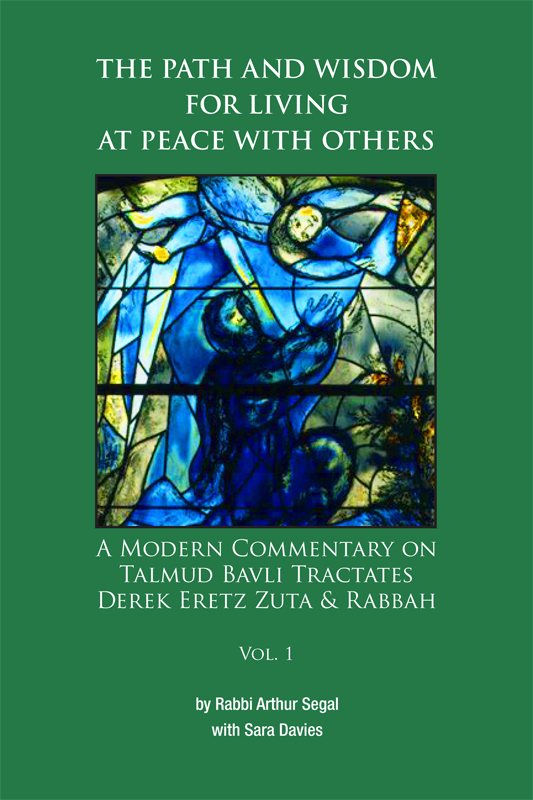
Rabbi Dr. Arthur Segal, Hilton Head, was lauded by The Institute of American and Talmudic Law as a "great example" of a "prominent Jewish leader" for his dedicated work in developing a Magan Tzedek, a Shield of Righteousness, ensuring that animals are treated humanely, and workers treated fairly, in kosher meat packing plants. His 3rd book: "The Path and Wisdom to Living with Others in Peace: A Modern Commentary to Talmud Tractates Derek Eretz Zuta and Rabbah, Vol.One," {Amazon Press}, was published this February.

____

Amazon Books and Rabbi Dr. Arthur Segal announce the publication of:  
''The Path and Wisdom for Living at Peace with Others : 
 A Modern Commentary to Talmud Bavli Tractates Derek Eretz Zuta and Rabbah'' 
 
This is Rabbi Dr. Arthur Segal's third book. As with all of his books, the messages and teachings are ecumenical and are popular with all people. 

 The term Derek Eretz, literally means "the way of the land". The Tractates teach us how to behave so that we get along with others, even difficult people. The texts teach us how to limit our egos with dealing with others so that we do not step on the toes of others inviting retaliation.

"Derek eretz comes before Torah" (Midrash Vayikra Rabbah 9:3) – one cannot personify Torah (Bible) until he demonstrates proper human to human behaviors in everything that he does.

 Derek Eretz is not about Jewish ritual. It is about how we are to treat one another and what traits of character we are to try to develop. The lessons are universal and ecumenical.  Derek Eretz teaches us decent, polite, respectful, thoughtful, and civilized behavior.

For the first time since these two Talmudic Tractates were written circa 1500 to 2000 years ago, a modern commentary has been written. We can see today in the media, on the streets, in the political arena, and in board rooms, that proper decorum is sorely lacking.

Here are two of the many important maxims in these two Tractates:

  • "If others speak evil of you let the greatest thing seem unimportant in your eyes; but if you have spoken evil of others, let the least word seem important."
  • "If you have done much good let it seem little in your eyes, and say: 'Not of my own have I done this, but of that good which has come to me through others'; but let a small kindness done to you appear great."

The chapter on Shalom is one of the entire Talmud's most joyous and hopeful to read. A sampling: "Seek peace, and pursue it," which means, seek peace at the place where you are, and if you do not find it, seek it in other places."

Rabbi Arthur Segal has dissected the verses in Talmud Bavli Tractates Derek Eretz Zuta and Rabbah, into an easy to read, easy to follow, four volume text, so that one can actually put this knowledge into every day practical use. Volume one is now published.

http://jewish.server272.com/wp-content/uploads/2012/01/coverimage.jpg

Other Best Selling books by Rabbi Arthur Segal:

THE HANDBOOK TO JEWISH SPIRITUAL RENEWAL:

A PATH OF TRANSFORMATION FOR THE MODERN JEW

http://jewish.server272.com/sample-page/the-handbook-to-jewish-spiritual-renewal
 

___________________________

AND

A SPIRITUAL AND ETHICAL COMPENDIUM TO THE TORAH AND TALMUD

http://jewish.server272.com/sample-page/a-spiritual-and-ethical-compendium-to-the-torah-and-talmud

 
For interviews Rabbi Segal can be reached at rabbiasegal@aol.com
 
 Rabbi Dr. Arthur Segal's love of Judaism and his Ahavath Israel led him on his personal quest for Jewish Spiritual Renewal, beginning his studies after retirement from a successful oral medicine practice. Rabbi Arthur Segal graduated cum laude with BA and DMD degrees, Oral Medicine Specialty, and Post-Doctoral studies in Psychology all from the University of Pennsylvania in the 1970s. He is an author in these chosen fields.

He was ordained a Rabbi with Semikah after ten years of intensive study, and was the first to bring weekly Torah and Mishna classes to one of the oldest synagogues in America where he held the position of Scholar-in-Residence for a year.

Rabbi Arthur Segal is an author of internationally acclaimed books and essays on Jewish Renewal, Mussar, Ethics, and Torah and Talmud.

Rabbi Arthur Segal was lauded by The Institute of American and Talmudic Law as "great example" of a "prominent Jewish leader" for his dedicated work in developing a Magan Tzedek, a Shield of Righteousness, insuring that animals are treated humanely, and workers treated fairly, in kosher meat packing plants.

Rabbi Arthur Segal was sited as one of the top 50 seminarians and theologians, and of these 50 only 3 were Jewish.

Rabbi Arthur Segal teaches classes on Jewish Spiritual Renewal and The Spiritual and Ethical Teachings of the Torah, TaNaK and Talmud in free on-line classes.(sign up). He teaches Torah, Talmud, Midrash and other great texts, such as Duties of the Heart by Ibn Pakudah of 1050 C.E. Spain, to adults in his hometown or via telephone conferencing.

Rabbi Dr. Arthur Segal does rabbinic counseling using the step-by-step process of Jewish Spiritual Renewal to help his fellow Jews achieve a spiritual life.

Rabbi Arthur Segal has lectured extensively the world over in almost all continents. He conducts Holiday and Shabbat services on cruise ships and for international congregations that do not have a rabbi.

He is highly sought after to conduct life cycle events, especially his custom made weddings.

Rabbi also works with Jewish prisoners who wish to effect change in their lives.

Rabbi Arthur Segal is happily married to his beshert, Ellen Freedman Segal. Together they have traveled to over 150 countries, visiting and aiding Jewish communities where they exist. He is active in his local community, serving on a variety of boards, mostly related to Arts and Cultural Diversity. Ellen and Rabbi Segal enjoy a life of shalom, shlema and gratitude, with their parrot, Avivit Keter.

 
Rabbi Arthur Segal www.jewishspiritualrenewal.org
Jewish Renewal www.jewishrenewal.info
Jewish Spiritual Renewal http://rabbiarthursegal.blogspot.com
Jewish Spirituality
Eco Judaism
facebook.com/RabbiArthurSegalJewishSpiritualRenewal
Hilton Head Island, SC, Bluffton, SC, Savannah, GA
 
Rabbi Arthur Segal www.jewishspiritualrenewal.org
Jewish Renewal www.jewishrenewal.info
Jewish Spiritual Renewal http://rabbiarthursegal.blogspot.com
Jewish Spirituality
Eco Judaism
facebook.com/RabbiArthurSegalJewishSpiritualRenewal
Hilton Head Island, SC, Bluffton, SC, Savannah, GA